01 • Overview
Alma’s first custom internal tool
The project
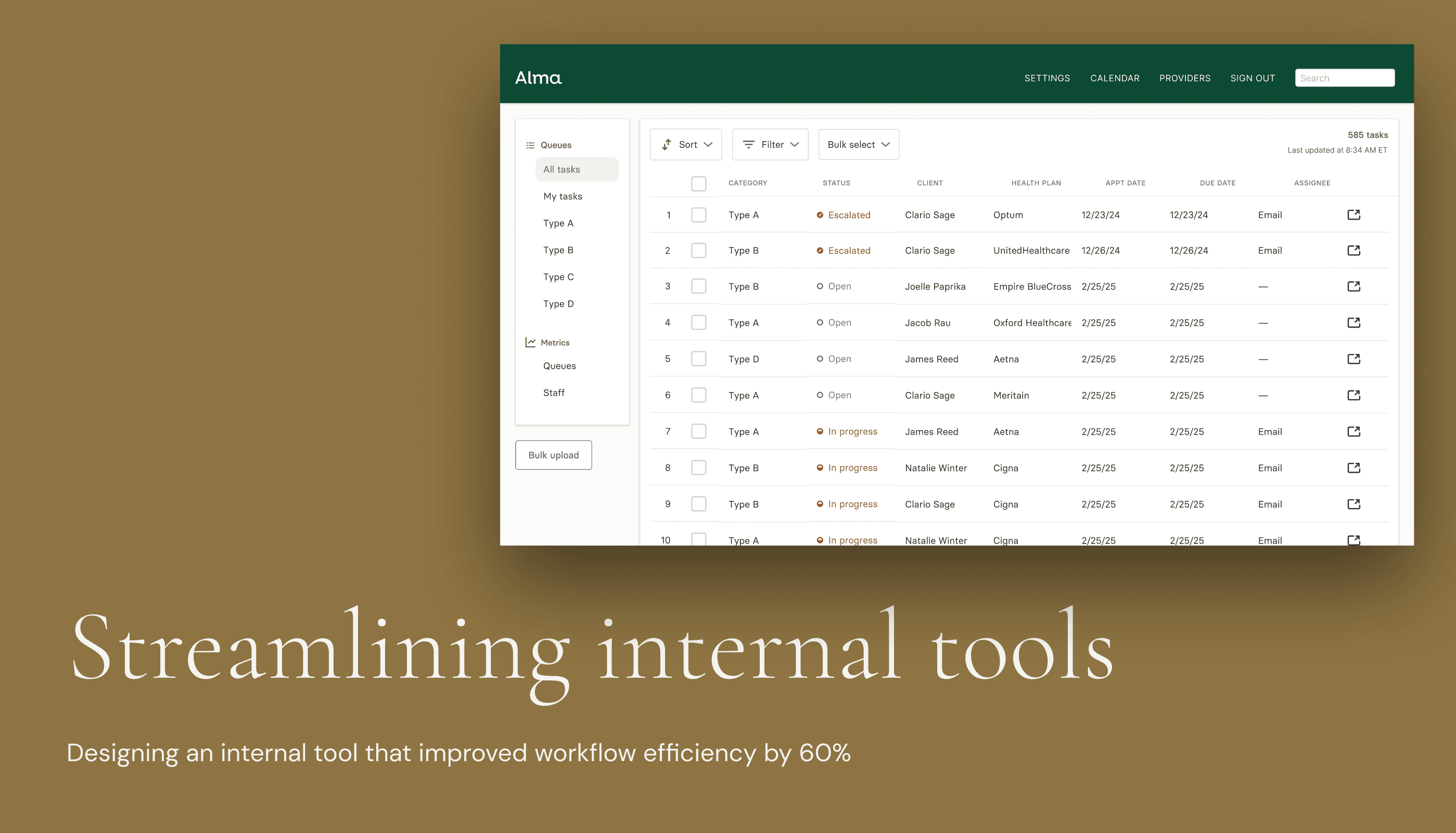
I led the design of the company’s first internal task management platform that improved workflow efficiency by 60% across Alma's 200+ person operations team.
My role
I was the lead designer and researcher for this project
COMPANY
Alma
TIMELINE
January - June 2025
02 • The Problem
One of the most critical internal workflows is also the most manual
Alma's Operations team manually managed the process of verifying patient insurance eligibility. This was a high-volume, time-sensitive workflow with no centralized system for delegating or tracking tasks.
WHY THIS MATTERS
25% of tickets contain errors, leading to 10% revenue loss
The result was a rigid, error-prone process: tasks were slow to assign, SLAs were difficult to meet, and rushing to meet deadlines led to mistakes. At the start of this project, 25% of eligibility checks contained errors, costing Alma 10% in revenue that year.
03 • Target User
Who are the users?
Primary: Managers
Frustration
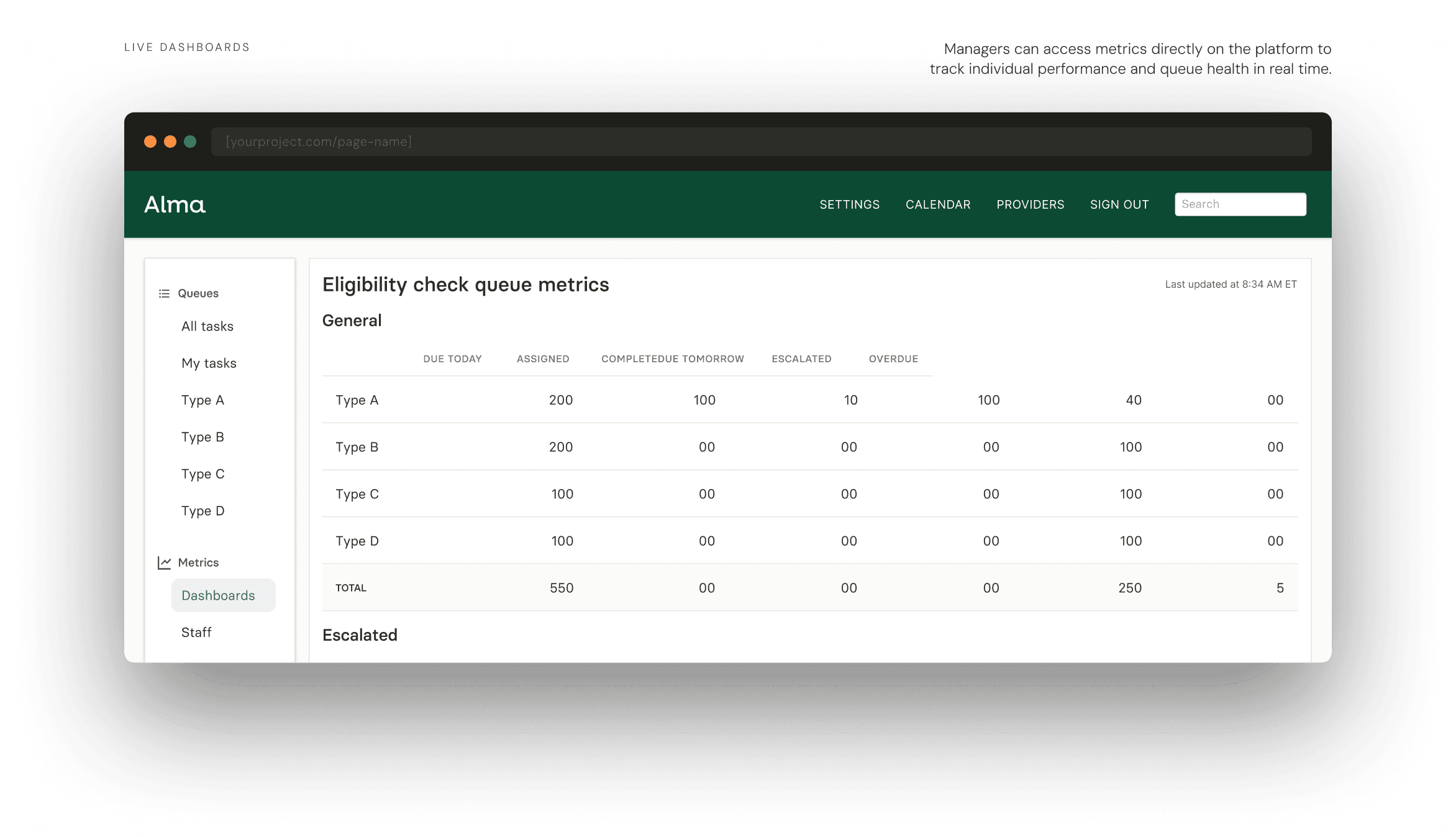
No real-time visibility into queue volume, how it changed throughout the day, and who was working on what
Slow, inflexible, and error-proned task assignment that is heavily manual
Goal
Delegate tasks efficiently, re-delegate during escalations, and see queue health in real time
Secondary: Associates
Frustration
Constant shifting between different teams and workflows based on volume or escalations, with no predictability
Duplicative work due to a lack of visibility into what associates are working on
GOAL
Complete as many tasks as accurately and quickly as possible while seamlessly shifting between queues
How do managers work?
Because delegation speed was ultimately the bottleneck to meeting SLA, we decided to focus MVP efforts on improving the delegation workflow, specifically.
At the start of this project, it took managers 2 hours every morning to manually download a .csv of the ticket list, build pivot tables to assess volume and priority, then manually delegate +1,000 across 15-20 staff. They often had to repeat this process mid-day if ticket volume was particularly high.

How should managers work?
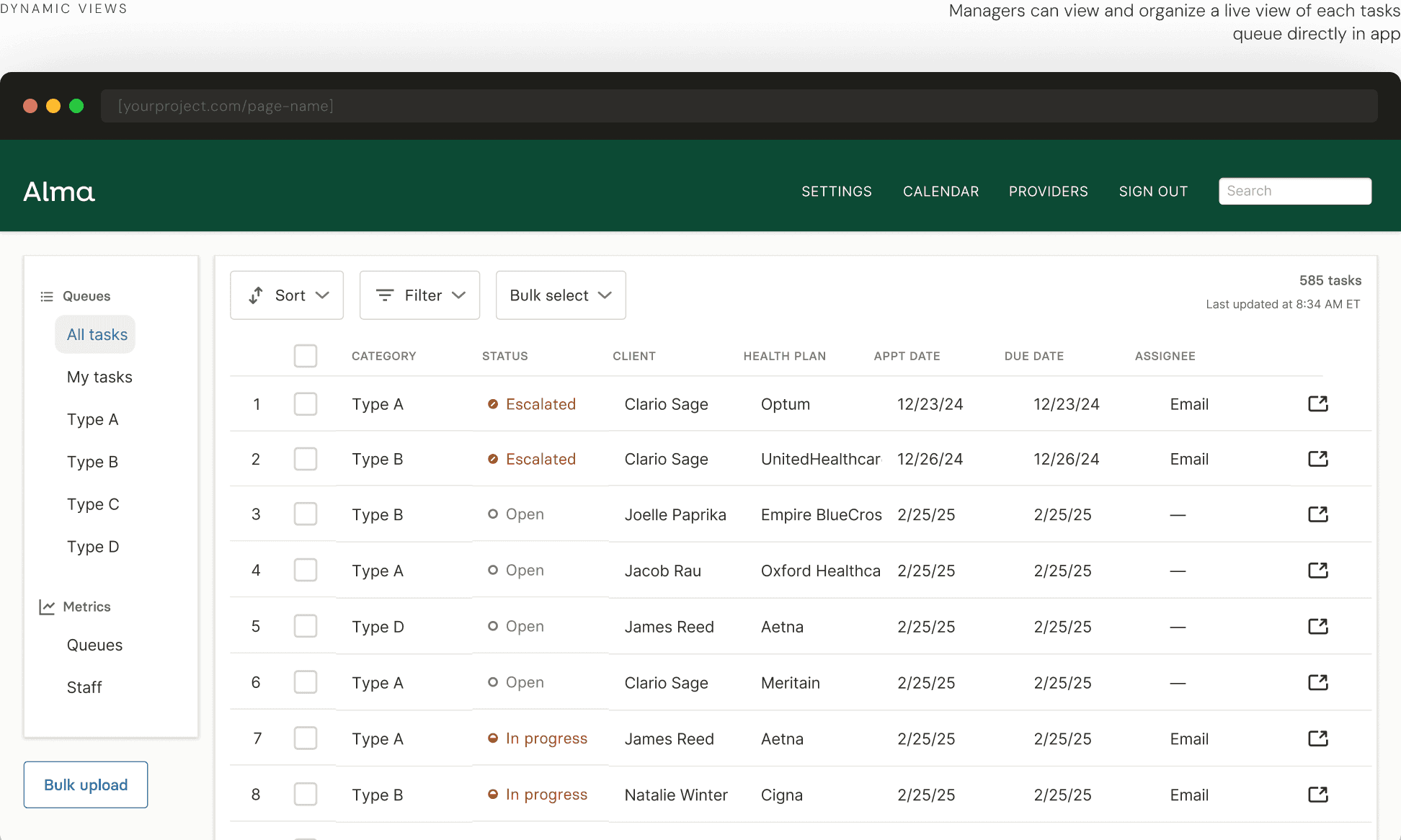
The new process moved delegation into the product where managers could sort, filter, and bulk-edit tasks from a table that updated in real-time. They still had to assess team bandwidh by checking staffing calendars out of the product, but every other step was optimized.

04 • Research
Expectations vs. Reality
Moving away from spreadsheets opened up the design opportunities considerably. To avoid building the wrong thing at scale, I grounded the work in research before committing to any solutions. I conducted over 10 hours of user interviews to map pain points across the team, and ran a competitive analysis to distinguish essential features from nice-to-haves.
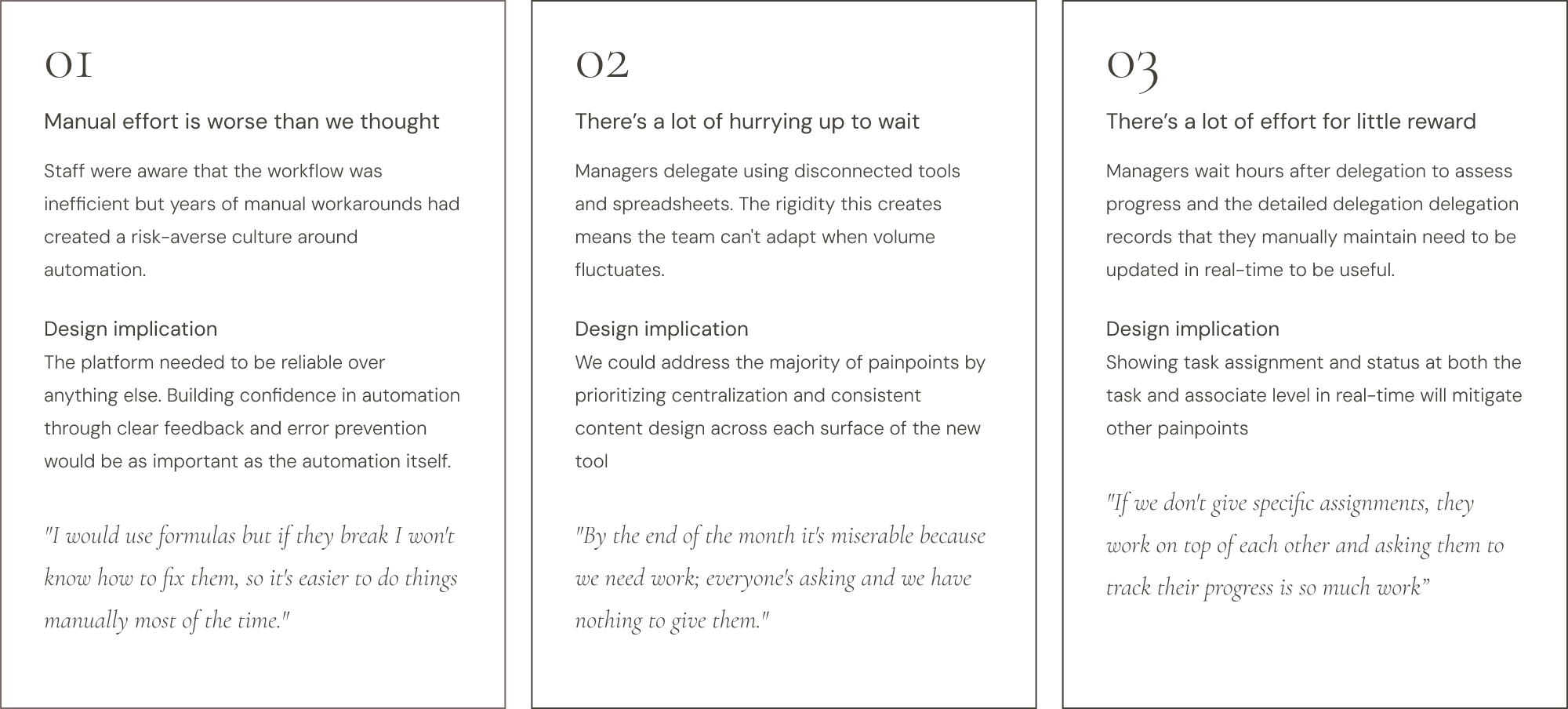
The most important insight came from user feedback on low-fidelity designs that didn't match what users had told me in my initial discovery interviews. The feedback kept highlighting new or different functionality. To dig into this, I built a working prototype in Airtable using real data and had staff test it in the context of their actual workflow. Once the tool stopped being conceptual, a pattern emerged: staff had quietly adapted the workflow their managers had taught them to suit their own working style.
05 • Key Design decisions
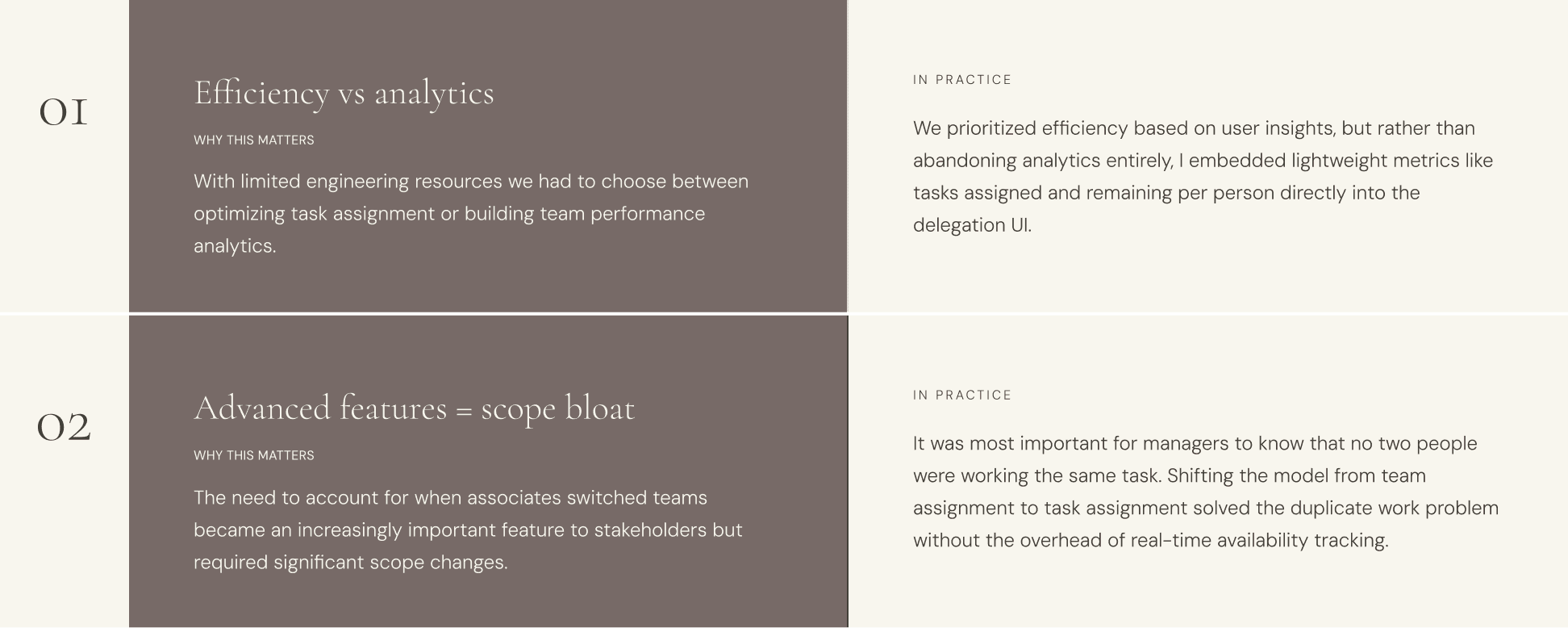
Inevitable curveballs
06 • Solution
Outcome
07 • impact
Immediate impact
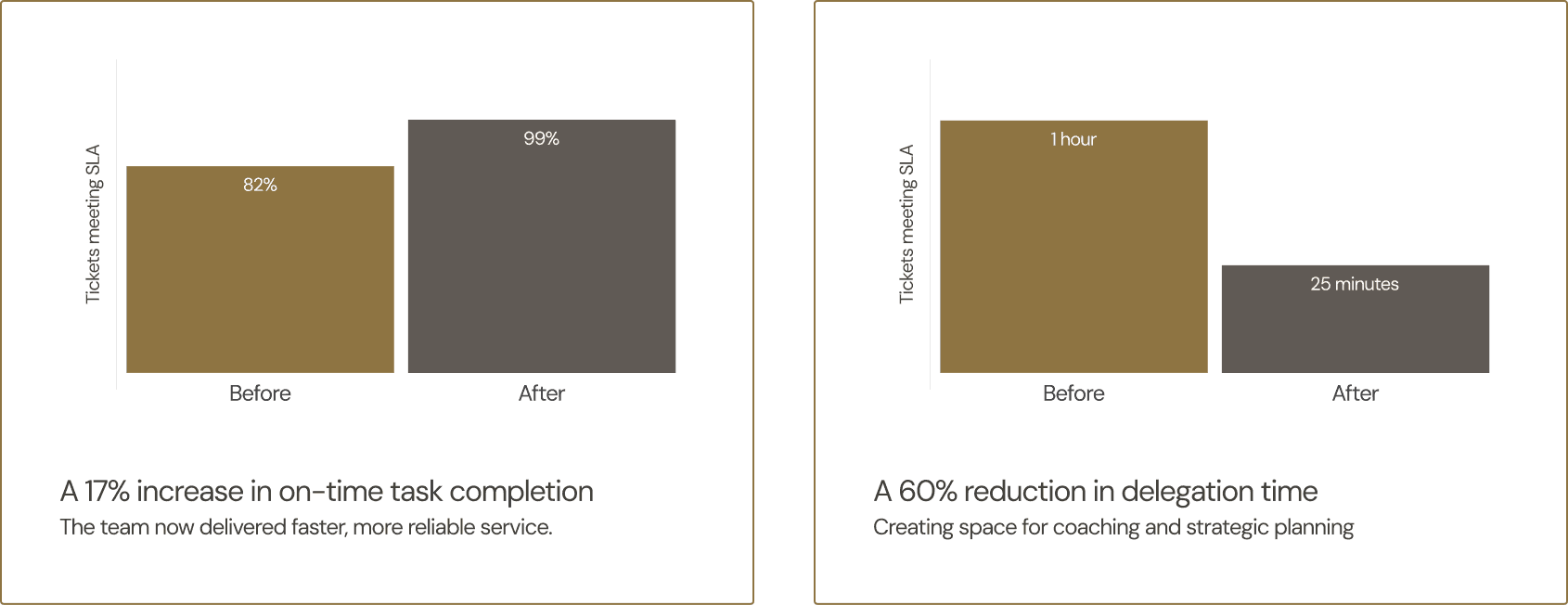
Within one month, on-time task completion rose from 82% to 99%, delegation time fell by 60% (from an hour to 25 minutes). These changes streamlined workflows and allowed managers to focus on coaching and strategic planning instead of administrative tasks.
08 • next steps
Beyond the MVP
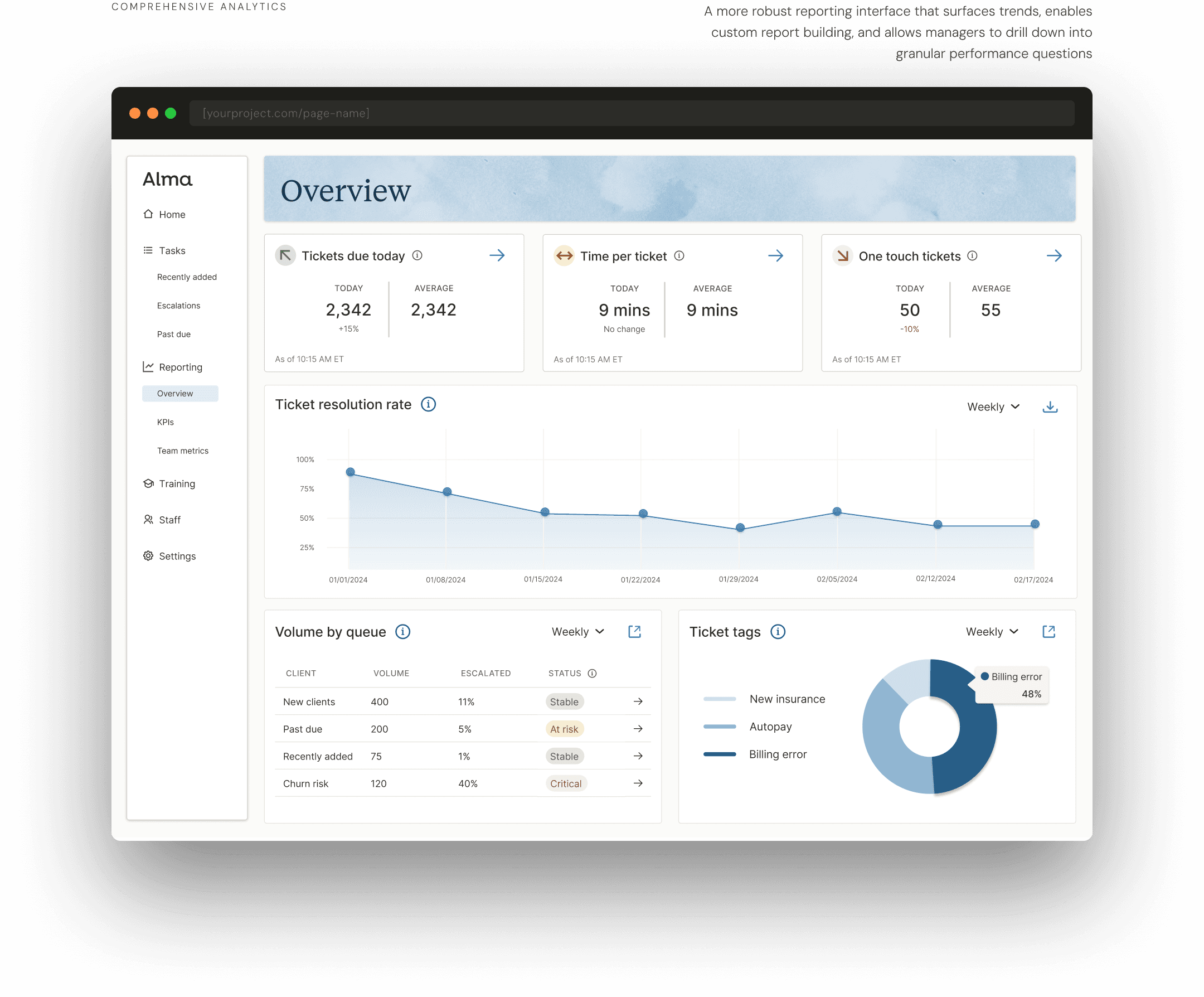
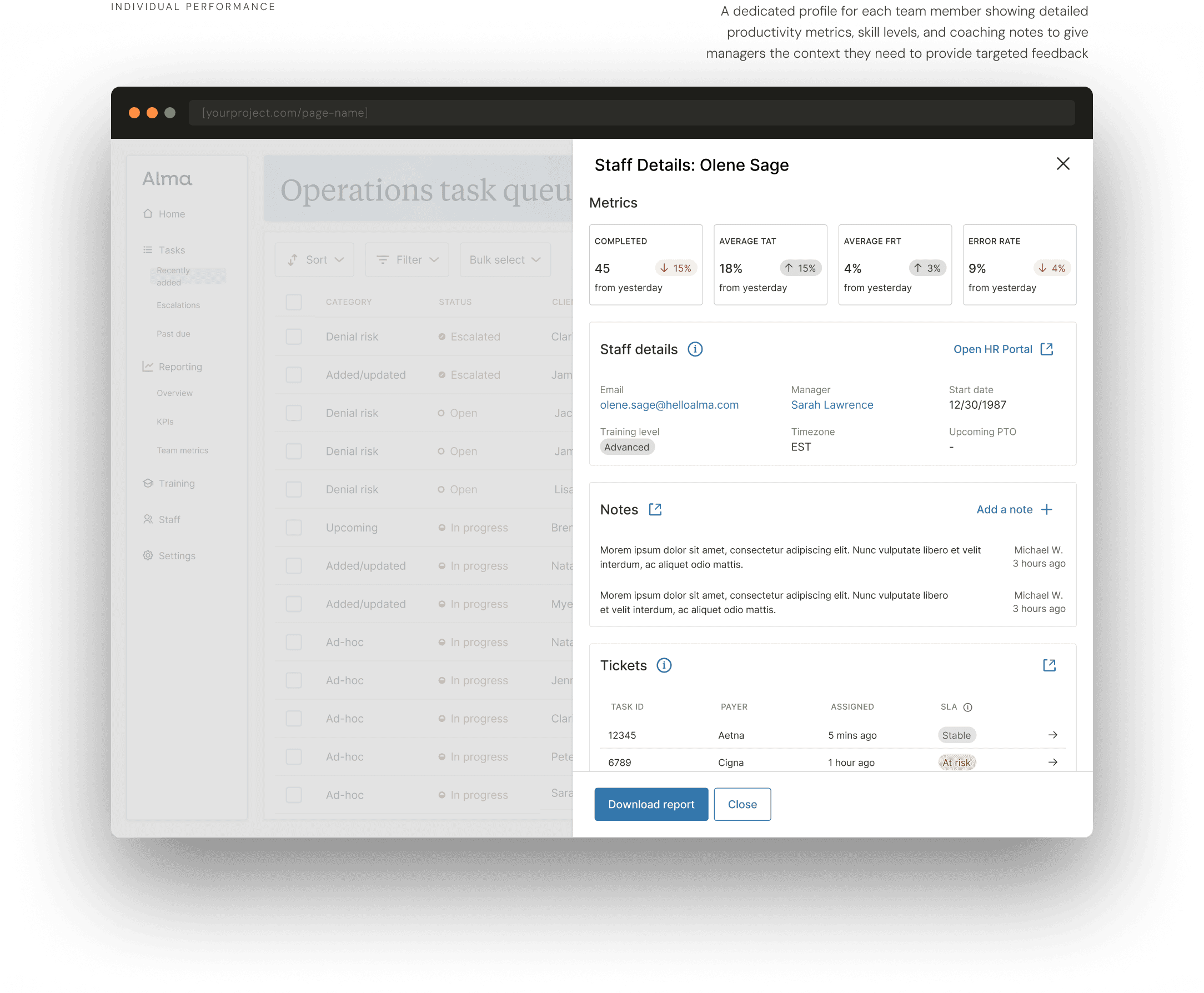
09 • reflection
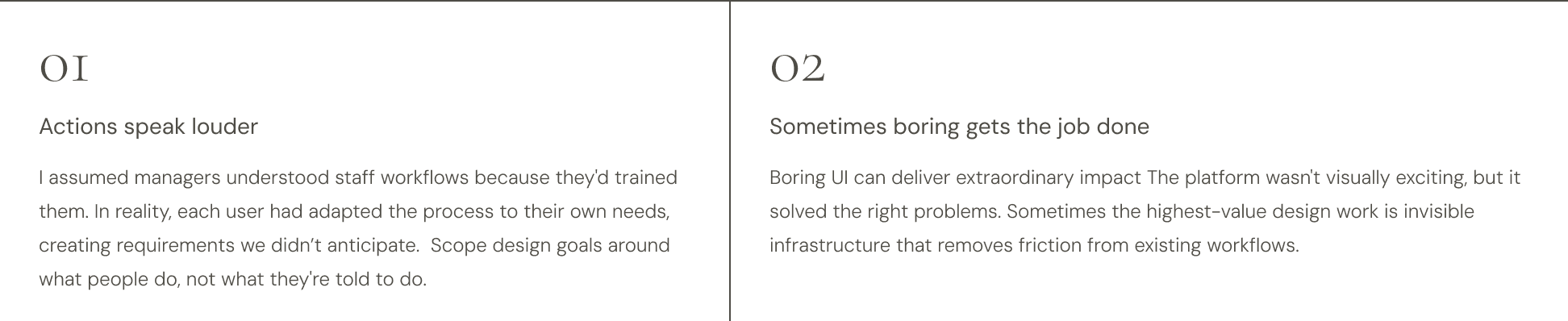
Lessons learned