01 • Overview
The first native user onboarding experience
The project
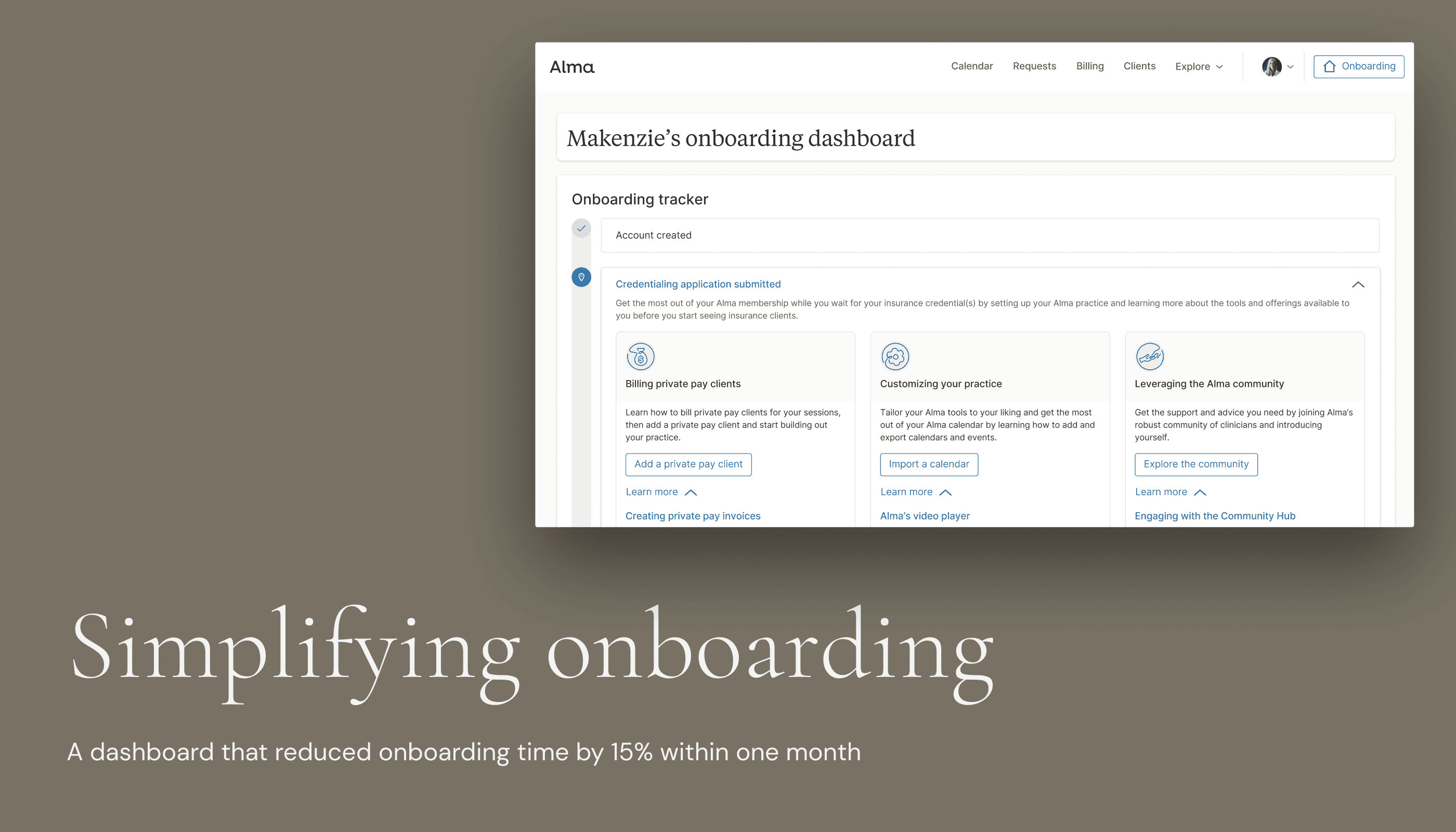
I led the design of Alma’s first onboarding feature with 500+ MAU, leading end to-end research and design efforts to reduce churn from 13% to 10% within the first month of launch
My role
I was the lead designer and researcher for this project
COMPANY
Alma
TIMELINE
January - August 2024
02 • The Problem
Users wait 2-3 weeks to first log in to the product
Alma lacked an in-app onboarding experience, which meant relying entirely on email to communicate expectations to users. New members joined Alma, then waited 2-3 weeks while we got them credentialed (i.e. able to accept health insurance) and created their public profile.
WHY THIS MATTERS
13% of users churn before their first claim
Time to activation (TTA) - the point at which a provider submits their first claim through Alma and experiences the key value prop of their membership averaged 71 days. The gap between signing and seeing value was too long, so momentum fizzled and motivation dropped, leading to 13% of all churned users churning during this period.
03 • Target User
Who are the users?
Frustration
Generic communication, entirely via email
Inability to engage with the product in the first few weeks
No visibility into expectations, goals, or next steps after joining
Goal
Get into the product, learn how to use the platform, and see value in their membership ASAP
CONTEXT
New members in their first month faced a disjointed onboarding experience. Left without clear guidance, personalized support, or a structured way to complete the critical steps needed to get credentialed and start seeing the value of their membership.
WHAT THEY NEED
A simple and centralized resource that shows them what to do and when during onboarding
04 · Stakeholders
Navigating stakeholder needs
Our Customer Support team wanted to make sure every single detail was thoroughly pressure tested before we shipped because more users on the platform meant the risk of more support tickets. In contrast, Leadership wanted something yesterday to mitigate churn. Our shrinking engineering team just wanted something simple to build.

Finding alignment
To drive alignment across stakeholder groups, we identified three key principles that would be the core of discussions throughout the project related to scope, LOE, and feature prioritization.

04 • Research
Mixed signals
I hosted workshops with our CX team to identify gaps in the onboarding process using Julie Dirksen’s theory on learning gaps. In the workshops, we created case ladders to identify stakeholders and issues in the onboarding journey. I chose workshops over interviews to explore the many unknowns, aiming for more insights through informal discussions.
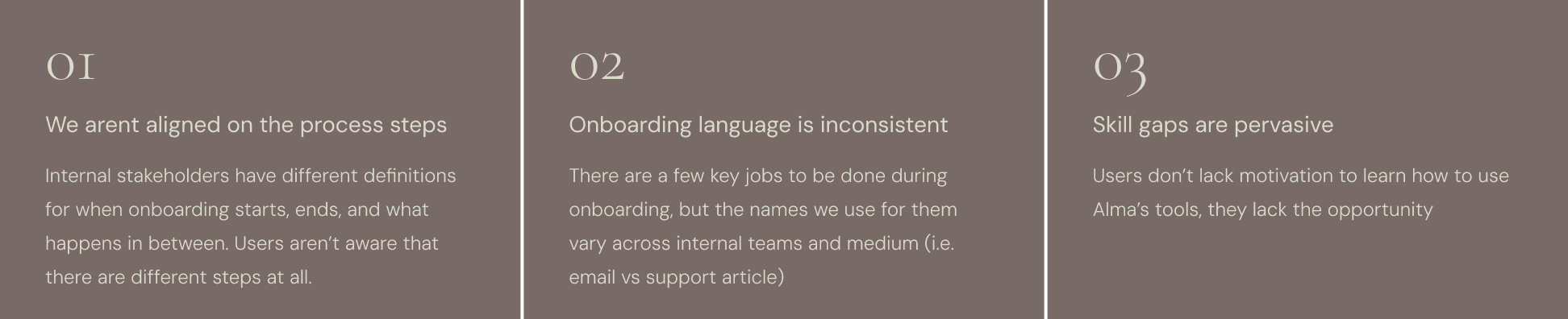
During the workshops, a major insight was the lack of a common language between users and staff regarding onboarding. Inconsistent terminology in support materials confused users from the start. To explore this, I surveyed over 100 users and staff, revealing gaps between internal language and user perceptions.
“Our main line of defense when a provider asks how to do something is sharing an article on how to do it and that can’t be effective”
Customer Support Team Member
"The onboarding form is one of the most important pieces of onboarding, but I think we have three different names for it”
Customer Support Team Member
05 • Key Design decisions
Inevitable curveballs
06 • Design process
Iteration
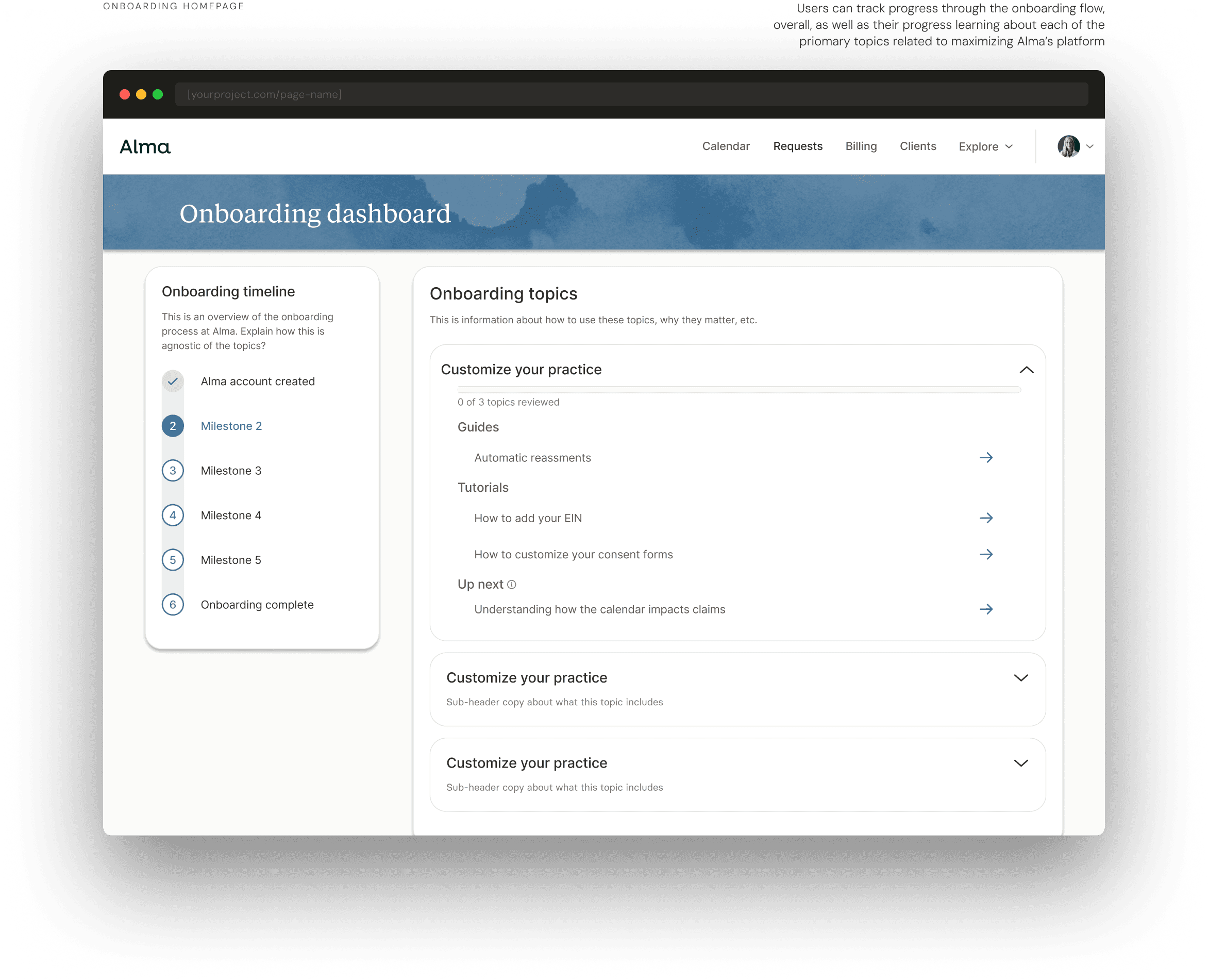
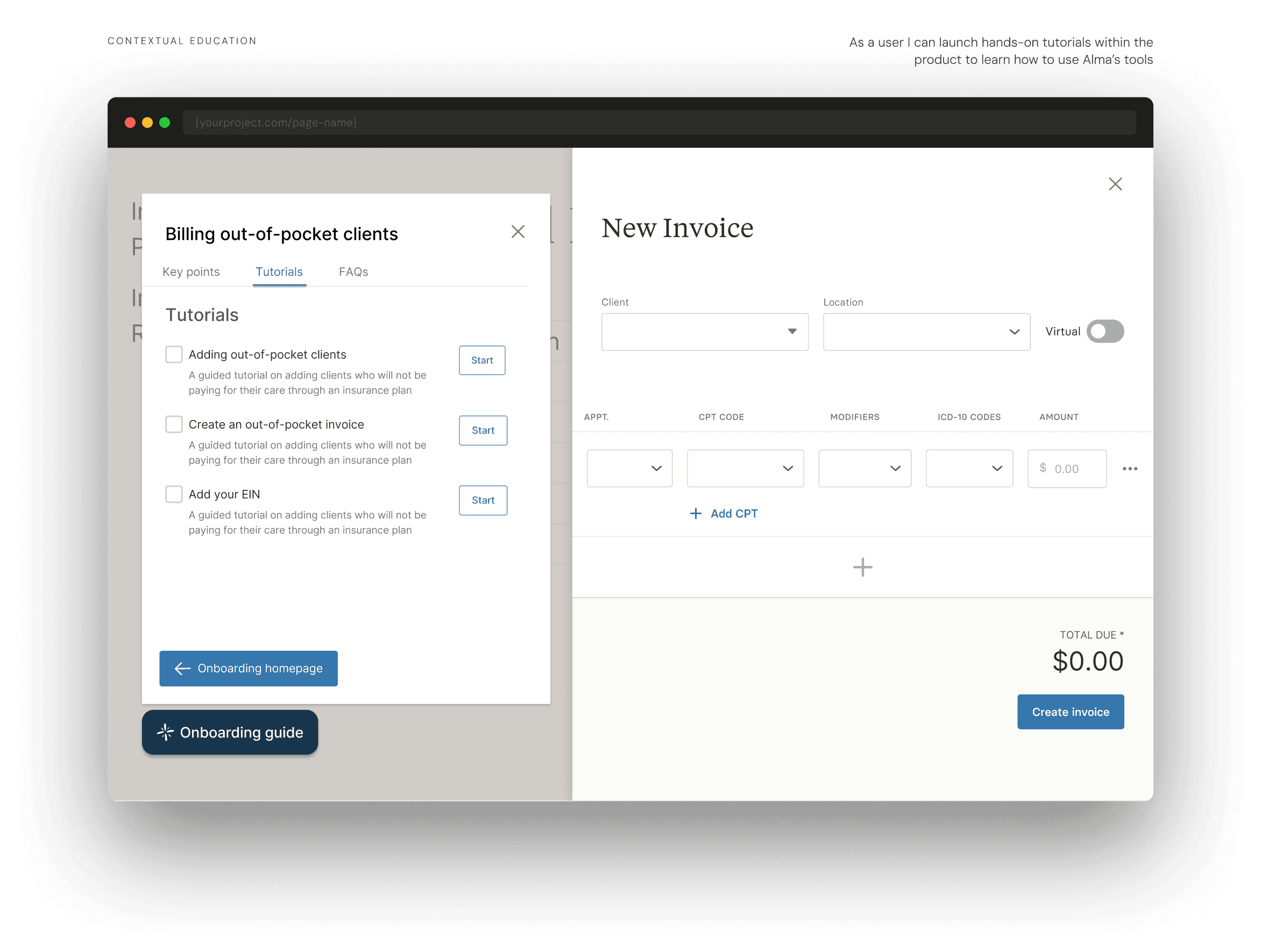
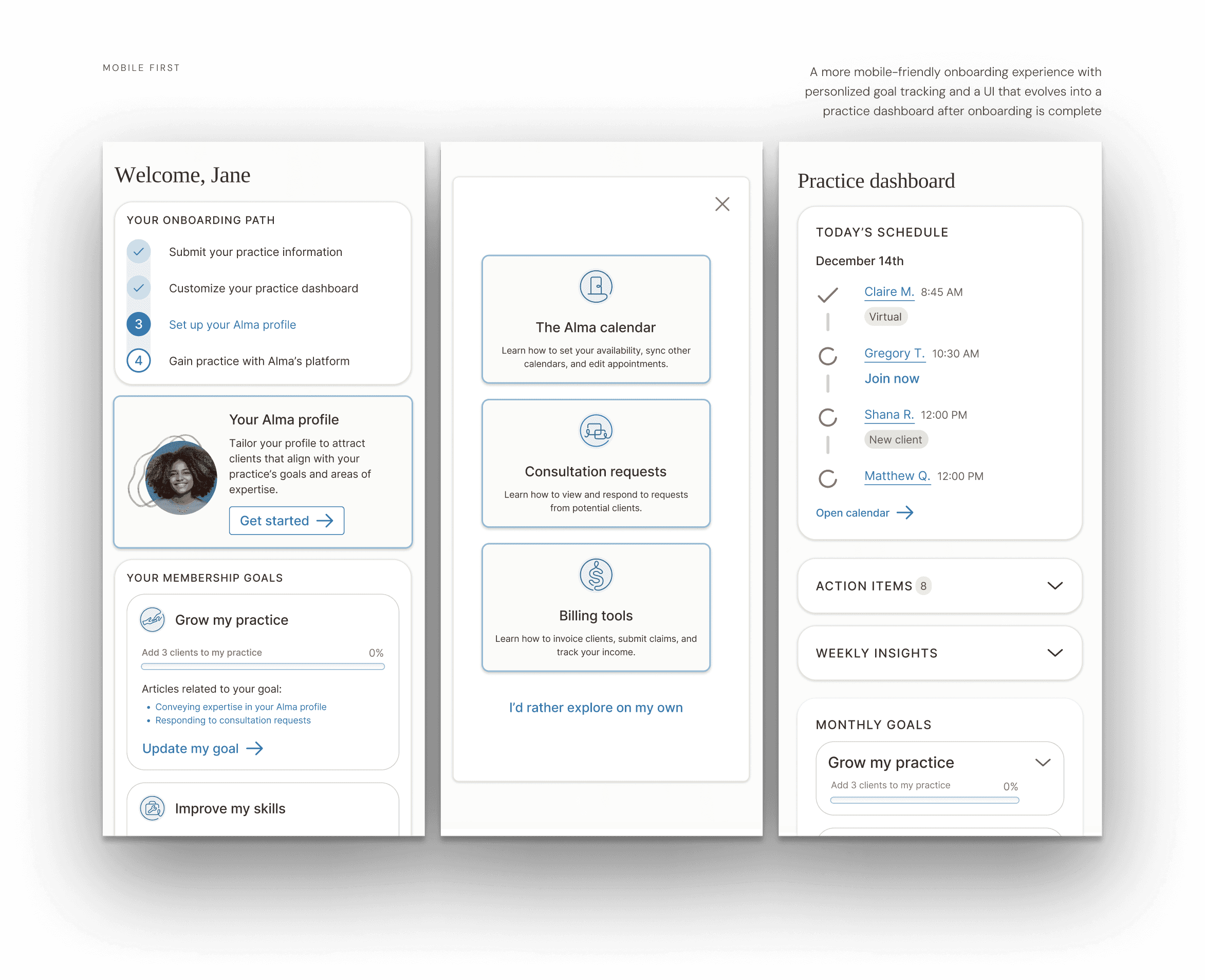
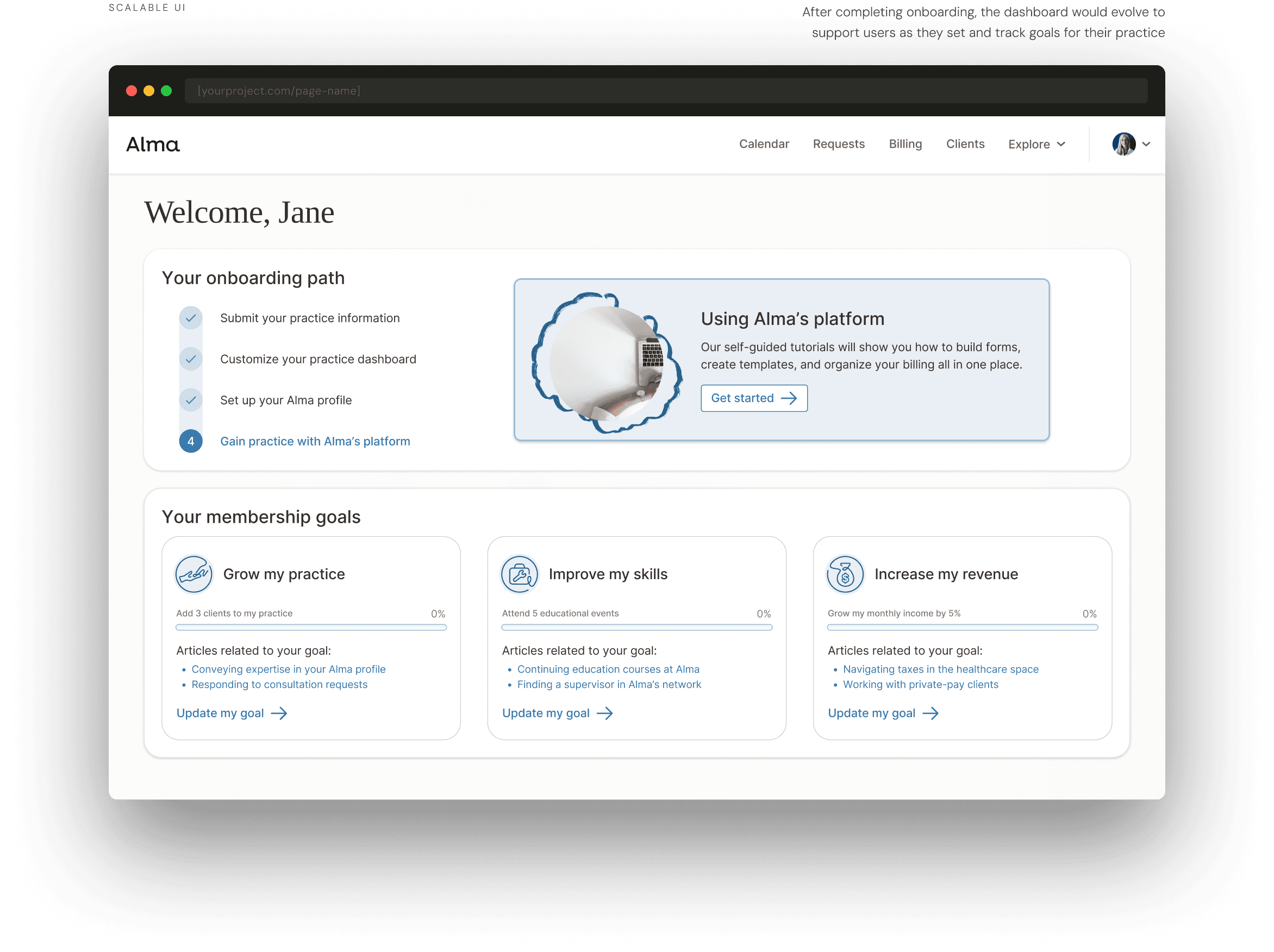
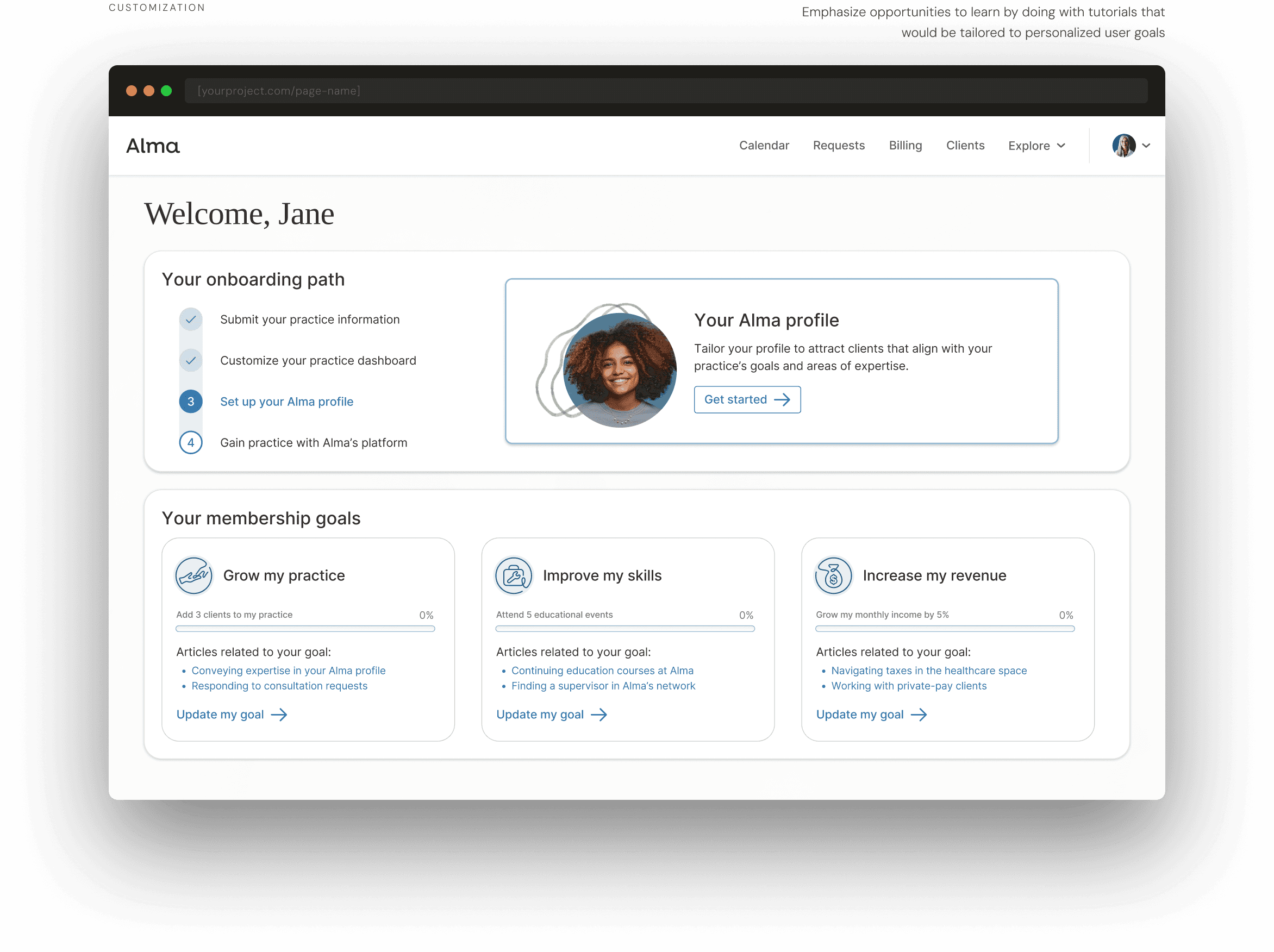
07 • solution
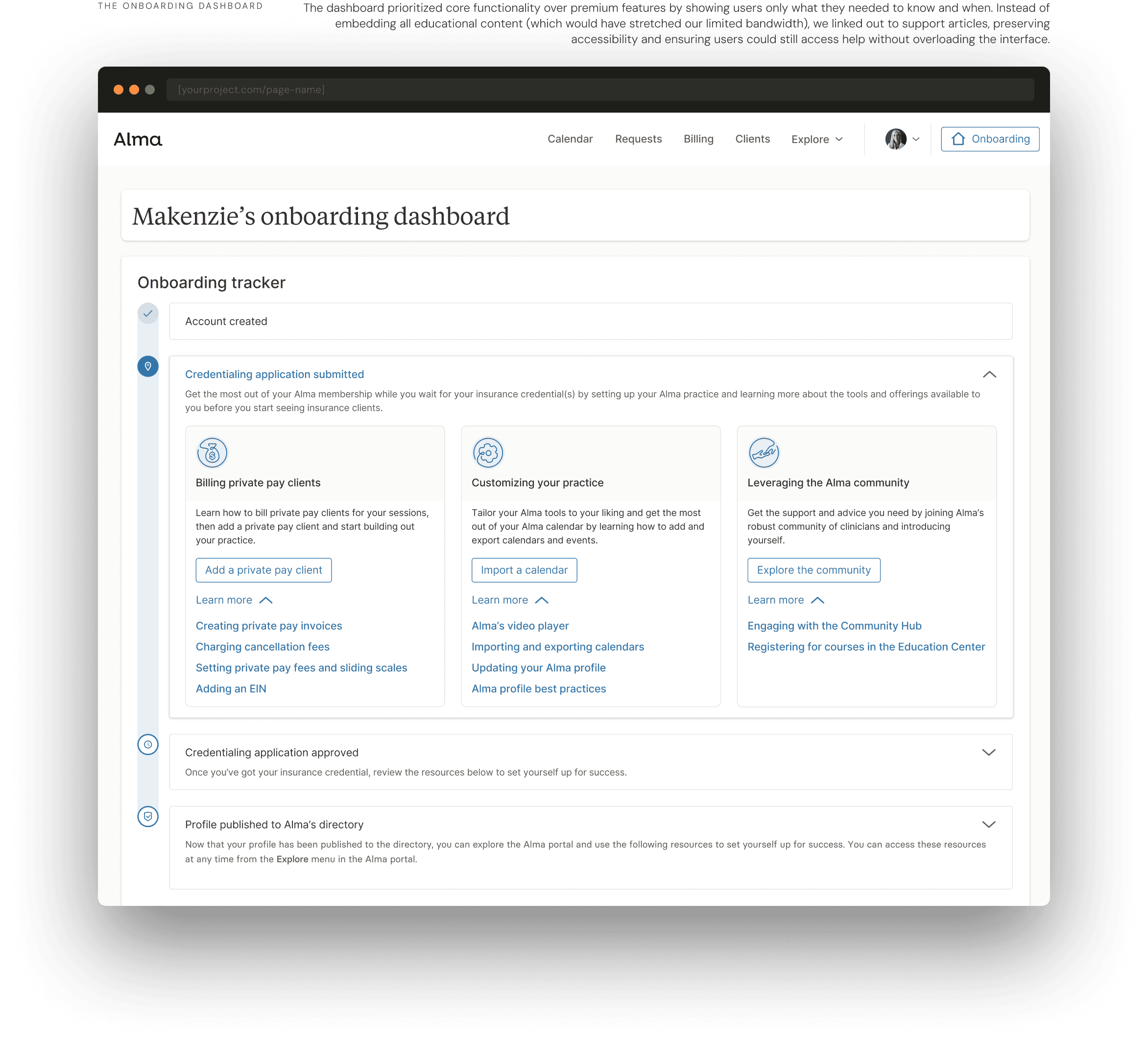
Outcome
08 • impact
Small but meaningful impact
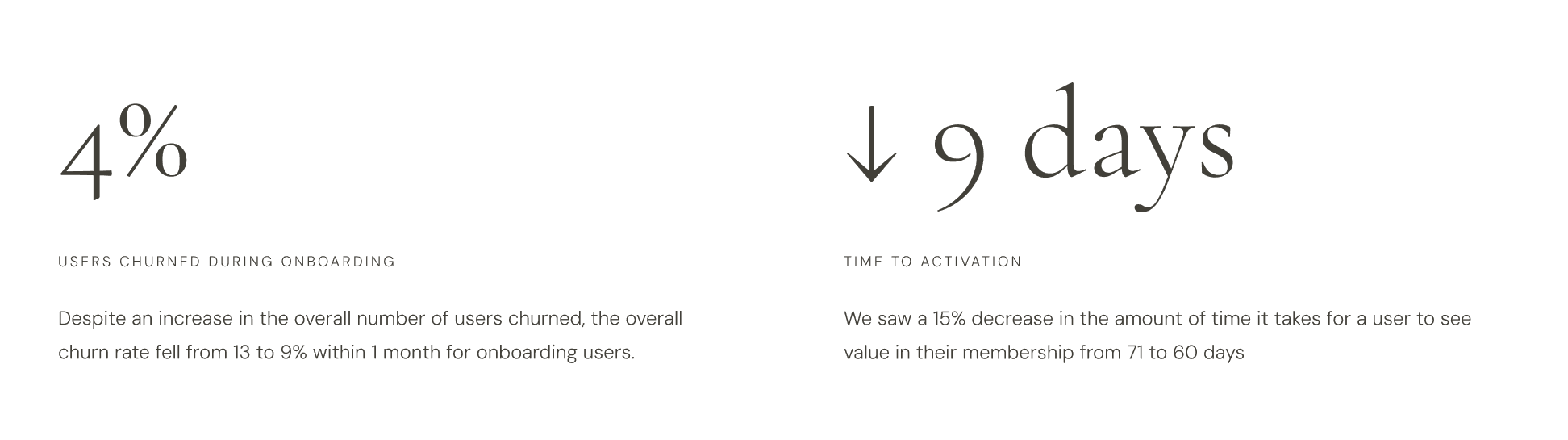
The new onboarding dashboard launched in August 2024 and immediately improved provider retention and speed to value. Within the first month, we saw measurable gains in both onboarding completion rates and time to activation (the point at which a provider submits their first claim through Alma).
09 • next steps
Beyond the MVP
10 • reflection
Embrace constraints